Toko: A Local Concept that Traveled the World

Placenames originate from the interactions between humans and places. Around the world, placenames are considered to be legacies of such interactions throughout history. Similar to historical artifacts unearthed from the ground, placenames that make space meaningful can also serve as a primary source for reconstructing the history of ancestors’ lives. Moreover, as a linguistic symbol, placenames can spread to a wider area following the movement of that language’s speakers. However, as entire language communities evolve and written languages transform, it could become difficult to thoroughly understand the meaning and origin of archaic placenames.

Toko is such a placename in the Hokkien language. Its origin is unknown, yet it is commonly used across Taiwan and even for locations and buildings in areas to where Hokkien merchants had sailed, such as Japan, Indonesia, and Thailand. Therefore, by studying the placename Toko, one can examine this name in a larger context and reconstruct the things linked together by toko in terms of both time and space.

繼續閱讀「Toko: A Local Concept that Traveled the World」

從在地到世界的土庫

摘要

地名是人與地方互動的產物,因此考證地名的源流和意義,可以為我們重建先民在這片土地生活的歷史,並且揭露一個族群在更大脈絡下的活動經驗。本文透過考證「土庫」的地名歷史和原始意義,一方面爬梳原始文獻,為地名考證的過程提供堅實基礎,同時也將討論範圍擴展到散布於東亞世界中的「土庫」,嘗試從更廣的視角探求難解地名的原意,以及先民在東亞世界活動經驗的普遍性。根據土地契約和地圖等文獻史料,「土庫」這個地名在臺灣本島的分布北自臺北,南到高雄,沒有明顯的地域性,可以推斷他是一個源自普遍生活經驗的地名。惟這個地名的原始意義已經不在現代人的生活經驗中,使我們必須從更多的歷史文獻著手。本文考證相關語言史料,發現土庫正如它字面上的意義,為土造防火倉庫,在十四世紀就已經出現在中國的文獻上。後來隨著閩南海商網絡在東亞海域的擴張,在日本、暹羅、印尼爪哇都有被稱為「土庫」的建築物,並在臺灣成為廣泛分布的地名。「土庫」一詞的語義也在十七、十八世紀擴張,從原本的防火倉庫,增加商業據點的意義,並進入馬來語,成為東南亞的文化成分。但在臺灣和閩南,用來稱呼防火倉庫的「土庫」被「火庫」取代,以致現代人無法理解「土庫」的意義,從而導出各種不同的俗民字源。透過考證「土庫」的地名源流,我們可以瞭解「土庫」在早期臺灣農業社會的功能,重建這個地名一度失去的意義,同時也以「土庫」為線索,將在地的地名與漢人在東亞世界的活動經驗連結,展現地名作為一個研究方法的潛力。

關鍵字:土庫、防火倉庫、商業據點、地名考證、海商網絡

繼續閱讀「從在地到世界的土庫」

Analytic Frame and Objective Tone:von Siebold’s Rhetorical Adaptation of a Casual Journal into a Scientific Ethnography

This article was presented at EAAA 2016, 15th – 16th October, Hokkaido University, Sapporo, Japan.


Abstract

The anthropological discipline “ethnography” can trace its roots to the travel reports describing non-European peoples in the age of exploration. This kind of literature provided the European public with overseas intelligence and foreign curiosities during the early modern period, and in modern times it became a source to enhance understanding of the past of peoples with less remaining self-documentation. This presents a dilemma for scholars because historic travel literature does not usually satisfy the modern standards of social science but may be the only source to access parts of the vanished past. A common solution for these later anthropologists is to adapt these sources to fit the framework of their scholarly works. The results are thus rhetorical, but this characteristic is hidden in the objectivity of the language as typically presented.

This paper takes a historical and bibliographical approach to review the case of Philipp Franz von Siebold’s nineteenth-century adaptation of a Dutch naval officer’s journal from the mid-seventeenth century to write about Ainu culture. In 1643, Cornelis Jansz. Coen, a Dutch officer, sailed on the ship Castricum to today’s Hokkaido, Sakhalin, and the southern Kuril Islands; he wrote in his journal about the Ainu people he encountered. Coen’s journal is still considered one of the few descriptions of the Ainu before the Japanese focused their attention on the north of the country in the late eighteenth century. After Coen’s journal was discovered in an archive and subsequently published in 1858, the famous Japanologist Philipp Franz von Siebold wrote a geographical and ethnographical elucidation of the culture of the Ainu based on Coen’s journal. In this article, von Siebold cited Coen’s journal to analyze eight topics of Ainu culture; this analytic frame makes his discourse appear scientific in its language. However, as we return to Coen’s original journal, it is obvious that he recorded his personal experiences on the voyage and that the journal served no ethnographical purpose beyond investigating the commercial opportunities for the Dutch East India Company.

Reviewing this historical and bibliographical context, this paper reveals that von Siebold’s account of Ainu culture was actually constrained by his sources, and his objectivity was a rhetorical product rather than an empirically studied science. This finding alerts modern scholars of the dangers of using historical sources to study the vanished culture of a particular ethnic group; it also highlights that treating a historical source in its true context is the only mean to avoid the danger.

繼續閱讀「Analytic Frame and Objective Tone:von Siebold’s Rhetorical Adaptation of a Casual Journal into a Scientific Ethnography」

Sinologist Ernst Johannes Eitel’s Hakka Studies: A Perspective of Missionary Ethnography

This article was read at the Joint East Asian Studies (JEAS) Conference 2016, 7th-9th September 2016, SOAS, London.

Abstract

German missionary Ernst Johannes Eitel (1838-1908) is an important scholar in the history of Hakka studies. His “Ethnographical Sketches of the Hakka Chinese” (1867-1869) and “An Outline History of the Hakkas” (1873) laid the foundation to develop Hakka identity in the early twentieth century, and Eitel’s methodology was also adopted by later scholars in their Hakka studies. In this paper, I start with reviewing his educational and evangelical backgrounds from archive materials kept in SOAS and Tübingen University to find what influenced him in writing history and ethnography. Then I analyze the etymological clarification of Eitel’s terminology, “ethnographic sketches”, and trace its scholarly root to the mid-eighteenth century Germany. I further make a comparison among Eitel’s works, the German Ethnographie/Völkerkunde tradition, and the British questionnaire of ethnological inquiry. The result reveals Eitel was strongly influenced by his native German tradition. Finally, I find the historical criticism of the Tübingen School, from which Eitel was nourished, was unable to help Eitel critically read the fictitious parts in Hakka genealogies and made him ironically constructed the myth of Hakka migration.

Keywords: Ernst Johannes Eitel (1838-1908), history of Hakka studies, history of ethnography, Hakka customs, construction Hakka migration history

繼續閱讀「Sinologist Ernst Johannes Eitel’s Hakka Studies: A Perspective of Missionary Ethnography」

被發明的Quaty:福爾摩沙人村社會議名稱考

緒論

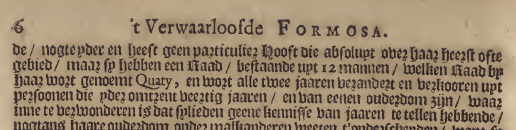
1675年一本作者署名「C. E. S.」的小冊子《被遺誤的福爾摩沙》(t’ Verwaarloosde Formosa)在荷蘭出版,一般認為這是臺灣最後一任荷蘭長官揆一與其同僚(Coyett et Socii)為1662年臺灣失陷所做的自我辯護。在本書的卷首,隱藏於C. E. S.之名下的作者或作者們,先為讀者揭示這本小書的主旨,並且介紹那個被遺誤的美麗島位於何方,島上居民的文化為何,讓讀者瞭解以下要敘述的事件是在什麼地方發生。[1]這段位於卷首的福爾摩沙地理與民族誌,可說是繼1628年Candidius牧師的〈福爾摩沙地理與歷史短論〉(“Discours ende Cort verhael, van’t Eylant Formosa”)後另一篇描述臺灣原住民文化的論述。不過1903年甘為霖牧師在將《被遺誤的福爾摩沙》英譯,收錄在《荷據下的福爾摩沙》(Formosa under the Dutch)第三部分時,卻沒有將這一段地理與民族誌敘述收錄進去。甘為霖的理由是這段敘述很大部分沿襲了Candidius的民族誌,而這部分已經在該書的第一部分收錄,所以沒有重複的必要。[2]

甘為霖的理由只對了一半,因為經過仔細比對後,C. E. S.的地理與民族誌雖然幾乎全部取材自Candidius的〈福爾摩沙地理與歷史短論〉,但是論述的語調與主題的編排卻完全不一樣。Candidius原本充滿個人經驗與觀點的筆記式論述經過C. E. S.的改寫刪減之後,語調變得較為客觀,編排也變得更為合理。從修辭的角度來評價的話,C. E. S.的版本精簡易讀,勝於Candidius的原文。再者,晚出的C. E. S.版也補充了一點Candidius在1628年不知道的資訊,例如北部的硫磺與臺灣恐怖的地震。[3]不過C. E. S.最重要的「補充」,可能是將福爾摩沙人的村社會議稱作Quaty,並在描述福爾摩沙村社的政治制度時,多次使用Quaty一詞指涉這個由十二名耆老組成的組織。[4] 奇怪的是,Candidius在1628年的報告中,雖然也詳細描述了村社會議的組織與功能,卻始終沒有提過Quaty這個詞。這讓我們現代讀者猜想,是不是在Candidius之後,荷蘭在臺官員終於發現福爾摩沙人村社會議的真正名稱?或是在原住民「文明化」的過程中,終於有人為既有的制度起了一個名字?其實都不是。當我們從文獻學的角度仔細考證Candidius的〈福爾摩沙地理與歷史短論〉從出版到C. E. S.改作的過程,就會發現Quaty其實是「手民誤植」加上「郢書燕說」的雙重錯誤所造成的「荷蘭發明」,並不是實際存在於臺灣原住民社會的詞彙。

繼續閱讀「被發明的Quaty:福爾摩沙人村社會議名稱考」

筑波大學交換留學心得(2014.9-2015.3)

動機

博士班學生申請交換留學,聽起來是很奇怪的事。一來是年紀和大部分申請交換留學的同學相比實在頗大了,二來我已經有五年的美國留學經驗,跟大家一起競爭交換留學名額不像上級生應有的風範。再說博士班學生通過資格考後,本應如火如荼地準備論文計畫和博士論文的寫作,此時離開台灣赴外交換留學半年,似乎會把這一切都拖延下來。特別是博士候選人資格考當天與交換留學行前說明會剛好撞期,在文學院大樓和雲和街系辦間兩邊趕場的我,也有點覺得把自己搞得太忙了。但從個人學術職涯的角度來看,此次補上師大赴外交換生的缺額,申請赴日本筑波大學交換留學,短期內可以讓我充分利用日本大學圖書館的學術資源來增進自己和目前參與的研究計畫,中長期則可以熟悉日本的學術資源與環境,拓展未來的學術職涯的可能性。因此,將自己的論文推遲半年參與交換留學,是相當值得一試的計畫。現在回顧起來,原定的目標都有達成,還額外培養了一些在日本獨自生活和處理問題的經驗,這半年可說沒有白費。

繼續閱讀「筑波大學交換留學心得(2014.9-2015.3)」

國語作文和語言規訓

摘要

「國語運動」藉由國民義務教育,將戰後的台灣人捲進語言規訓的機制中,塑造了現在台灣的語言狀況。但過去學界對「國語運動」的討論,多著重於制度面的探討,以及「國語運動」對「國語」以外語言的壓制,鮮少討論「國語運動」所操弄的規訓機制,亦無法解釋過去的政策與當前語言現象間的因果關係。但經杷梳史料後發現,「國語作文」是學校教師監視學生語言表現的重要技術,也是少數成功的規訓技術。本文將分析「國語作文」的性質,討論規訓的權力如何透過作文滲透進學生的心靈而成為現在台灣社會對書面語的不成文標準,最後並與近年來的語言現象連結,解釋台灣社會對書面語言的保守心態。

關鍵詞:國語運動、規訓、作文、Michel Foucault

繼續閱讀「國語作文和語言規訓」

中華文化復興運動下的國語運動與意識型態

1.    前言

「統一的國家,統一的國語」曾經是世界各國在十九世紀末到二十世紀中的共同想像,各國在不同的時空環境下都曾推廣單一語言作為統一國家的工具,其影響到現在仍存在於社會中。臺灣在二十世紀歷經日本帝國和中華民國兩個階段的統治,在1945年日本戰敗之前,臺灣的「國語」是日本語,在之後則是以北京話為基礎制定的「國語」,[1]而「國語運動」便是指第二次世界大戰後在臺灣透過官方力量推行、普及國語的一切措施的總稱。由於國語運動是影響戰後臺灣社會最重要的政策之一,除了主持國語運動的單位和學者留下的史料以外,[2]在學術界也不缺乏綜觀性和微觀性的研究[3],但是這些研究多著重於國語推行政策和制度的整理和分析,對政策背後的意識型態和政策形成的脈絡較少著墨,而對身為政策執行者的國語教師,現有研究也沒有對他們的意識型態做出足夠的分析。除此之外,國語運動的推行組織雖然自1959年以後每況愈下,但在1966年蔣中正發起中華文化復興運動(以下簡稱「文復運動」)之後,國語運動的目標便被整合進文復運動,更加確立國語作為「團結民族」的工具。尤其是關於1970年代,臺灣在面臨退出聯合國、石油危機、蔣中正去世、與美國斷交等等國內外動盪的情勢,以及國內的方言演說、方言節目漸漸威脅到國語的地位時,當時國語運動的推行者的意識型態,還有他們如何應對方言對國語的挑戰,都是尚待分析理解的議題。本研究將把1960年代中以後的國語運動放在中華文化復興運動的脈絡下討論,並從當時對於語文教學、方言電視節目和國語教育成效的辯論中發掘文復運動下國語運動推行者的意識型態。

繼續閱讀「中華文化復興運動下的國語運動與意識型態」

臺北圭母子社和大浪泵社研究 A Historical Study of Two Indigenous Villages in Taipei City: Kimotsie and Pourompon

〈大臺北古地圖〉局部。編號9為Kimotsi(圭母子),編號10為Marnat森林(劍潭山),編號11為Pourompon(大浪泵)。

摘要

位於今天臺北市中心的圭母子社(又有奇武卒、奇武子、奎府聚等表記),以及其鄰近的大浪泵社,是討論臺北市早期歷史時一定會提到的原住民村社。但是在學術研究上,圭母子社和大浪泵社卻是臺北市中心地區尚未被仔細研究過的村社。其實從現存史料來看,他們兩社的相關史料涉及的範圍遼闊,除了現在的臺北市中心地帶的大同區、中山區、大安區以外,圭母子社甚至出了一位南港大通事瑪珯,管轄範圍和名下產業廣及臺北盆地西部、南部各處,並留下數量不少的古契字史料。本研究依循傳統研究平埔族社史的方法,運用荷蘭文獻和古契字指出兩社的社址和勢力範圍,並進一步嘗試描述出身於這兩社,在歷史上曾經迅速地回應社會與制度的變化的原住民菁英。這些人包括前述出身圭母子的南港大通事瑪珯、知名原住民番業主潘如正,以及清末到日本時代初期的兩位秀才陳駿高和陳駿清。本文謹以目前已經發現整理的史料,檢證前人既有之見解,描繪十七世紀中葉到二十世紀初的圭母子社和大浪泵社歷史。

關鍵字:圭母子(奇武卒、奇武子、奎府聚)社、大浪泵社、番通事、原住民菁英

繼續閱讀「臺北圭母子社和大浪泵社研究 A Historical Study of Two Indigenous Villages in Taipei City: Kimotsie and Pourompon」

來說說金銀島的事

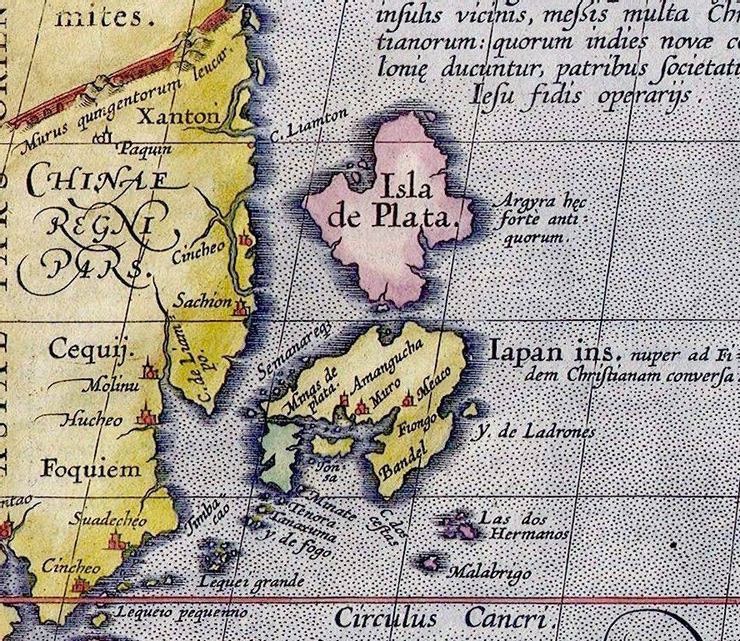
1589年 Ortelius 的太平洋地圖上,在日本的北方有 Isla de Plata(銀島)的紀載。小琉球(Lequeio pequeino,台灣)就在紅色的北回歸線上

來說說金銀島的事。十八世紀初葉,長崎學者西川如見在《長崎夜話草》中,記載了一個紅毛人抵達金銀島的故事。話說紅毛人(此處應該是指荷蘭人)的船被颱風颳到日本東北方海域的未知島嶼,水手上岸取水時,發現海岸佈滿金砂,所以帶了不少金砂上船。結果載運了金砂的小船怎麼推都推不動,水手心生對超自然力量的畏懼,趕快把金砂全丟掉,才順利回到母船。後來這艘船到了平戶河內浦(鄭成功出生地),發現船底有附在上面的金砂,就把它挖下來買酒喝。有人問起,他們就說自己肯定到了世界地圖上日本附近的金銀島。不過日後紅毛人想再去那座金銀島時,就再也找不到了。

繼續閱讀「來說說金銀島的事」